How to Raise Your Prices Without Losing Clients
Most independent salon owners undercharge for years and don't know it. Here's how to raise prices without losing the clients who matter.
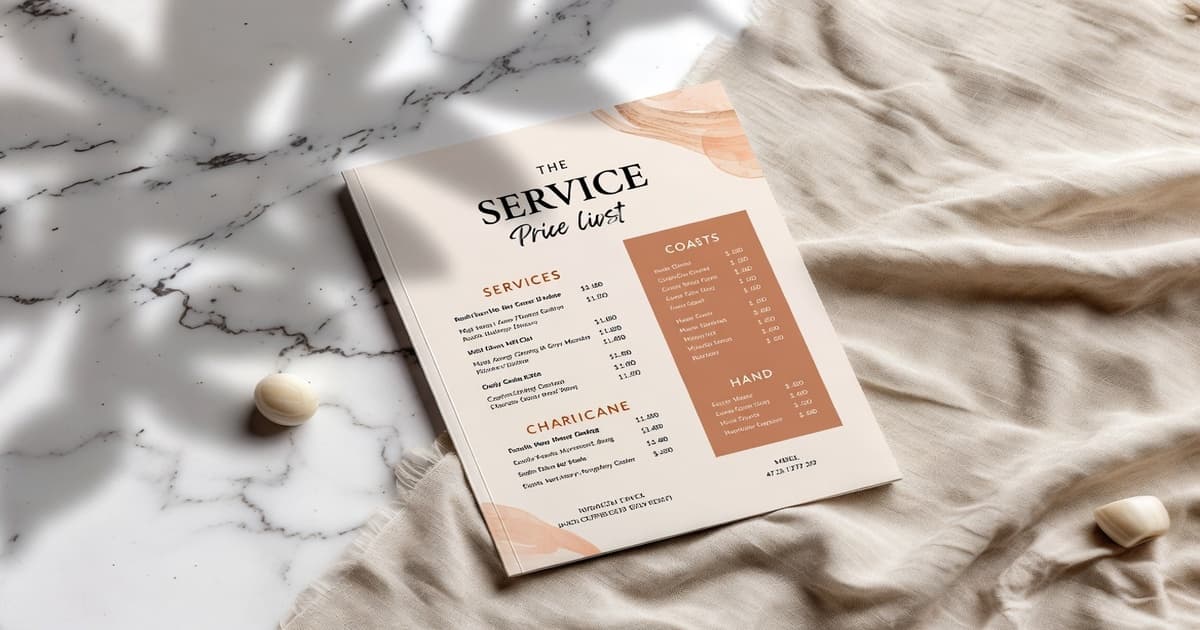
Most independent salon owners undercharge for years before they raise prices, and most of them are dreading the conversation when they finally do.
The fear is reasonable. Pricing is one of the few things a service business does that almost every client notices. A bad price increase can chase away regulars and damage trust that took years to build.
But the cost of not raising prices, compounded over five years of inflation and skill growth, is almost always larger than the cost of doing it. Here is how to raise prices in a way that feels routine instead of risky.
The cost of not raising prices
A nail technician charging $50 for a gel manicure in 2020 who still charges $50 in 2026 has effectively taken a pay cut every year since. Product costs are up. Rent is up. Utilities are up. Their skill is better than it was. None of that is reflected in what they charge.
The compounded effect is brutal. If you held your prices flat for five years during a period of seven percent annual inflation, your real income from each appointment is down about thirty percent. The same hour of your time, the same skill, the same energy, is buying you thirty percent less.
Most owners do not feel this directly. They feel it indirectly: the business is harder, money is tighter, and they cannot figure out why. Inflation is silent. Skipping a price increase feels like a non-event. The math says otherwise.
When to raise prices
There are four reliable signals.
You are fully booked. If your books are consistently full two weeks out, demand is exceeding supply at your current price. The market is telling you the price is too low.
You have not raised prices in over a year. Inflation alone justifies a small annual increase. Three or four percent is barely perceptible to a client and meaningful over time.
Your skills or services have meaningfully improved. You took an advanced course. You now offer color correction. Your average appointment is more sophisticated than it was a year ago. The price should reflect that.
You have a clear sense of which clients are draining you. When you find yourself dreading certain appointments, especially the ones at the lowest end of your service menu, the pricing is misaligned. Raising prices is one way to gracefully reduce the share of those clients.
How much to raise
For a routine inflation-driven increase: five to ten percent.
For a "first increase in years" recalibration: ten to fifteen percent.
For a major repositioning (new specialty, much higher-end space, significantly different service): twenty percent or more, and consider whether you are actually launching a different business.
Round to clean numbers. A gel manicure going from $50 to $55 reads cleanly. From $50 to $54.50 reads like a hospital bill.
For comparison, most beauty businesses underprice by twenty to thirty percent relative to their skill level and market. A "scary" fifteen percent increase usually still leaves you below market.
How to communicate the change
The message matters more than the math. Three rules.
Give notice. Tell clients at least thirty days before the change takes effect. Sixty days is even better. This respects the relationship and gives them time to book at the current rate if they want to.
Be brief and direct. Long explanations sound defensive. The change is happening. Here is what it is. Here is when it takes effect.
Don't apologize. An apology signals you don't think the new price is fair. If you don't think it's fair, don't raise prices. If you do think it's fair, communicate it as a normal business decision.
A workable message:
Hi everyone, a quick note: starting July 1, our service prices are going up slightly to reflect the cost of running the studio and the time I've put into advanced training this year. Most services will see a $5 to $10 increase. Bookings made before July 1 will be honored at current rates. Thank you for trusting me with your hair. See you soon.
That message takes thirty seconds to read and lands as a competent business communication.
Who you'll lose, who you'll keep
This is the part most owners get wrong.
The clients who leave when you raise prices are rarely your favorites. They are usually the price-sensitive clients you secretly dread seeing on the schedule. The ones who haggle, complain, or skip the tip.
The clients who stay are the ones who valued you for reasons beyond price. They will absorb a ten percent increase without thinking about it, because the relationship was never about the dollar amount.
Plan for roughly five to fifteen percent of your client base to drop off after a price increase. If your loss is much higher than that, the increase was too large or the communication was off. If your loss is zero, your increase was probably too small.
The salons that hesitate longest are usually losing more revenue to inertia than they would lose to a thoughtful price increase.
What to do with the extra capacity
If you lose five percent of your clients but your prices went up ten percent, your gross revenue is up. Your hours worked may be slightly lower. Both are wins.
The recovered capacity is the most valuable side effect of a price increase. Use it deliberately. Take on higher-value services. Pursue clients who match your positioning. Take a day off without guilt.
Resist the urge to backfill at the old prices. The whole point of the increase was to reset what your time is worth.
When to raise prices again
Annually, on a predictable schedule. Pick a date (most beauty businesses use January or their fiscal anniversary), apply a five to seven percent increase, and communicate it the same way every year.
Predictable annual increases feel routine to clients. They expect it. Many other professionals (dentists, accountants, contractors) do exactly this, and nobody questions it.
The compounding effect of small, consistent annual increases is enormous over a five-year horizon. It is also a much smoother trajectory than the boom-bust pattern of "no increases for years, then a big jump."
A note on positioning
Pricing is positioning. The salon charging $25 for a manicure and the salon charging $75 for a manicure are not selling the same service to the same clients. They are different businesses.
If you want to be the affordable option in your market, hold your prices low and compete on volume and convenience. If you want to be the premium option, charge accordingly. The dangerous spot is the middle: charging like an affordable salon while delivering premium service, which is how owners end up exhausted and underpaid.
The first hundred clients you serve (see the first 100 clients) set your pricing trajectory for years. Be intentional about where you land, and revisit it once a year as part of running the business.

Built for businesses like yours
Lumidara is the affordable scheduling and client platform for independent salons, nail studios, lash bars, and spas. Free to start. No credit card required.
See how Lumidara works