Points vs Punch Cards: Which Loyalty Format Works Best for Beauty Businesses?
Punch cards reward visits. Points reward spend. The format you pick shapes which clients you keep and what your loyalty program is actually worth.
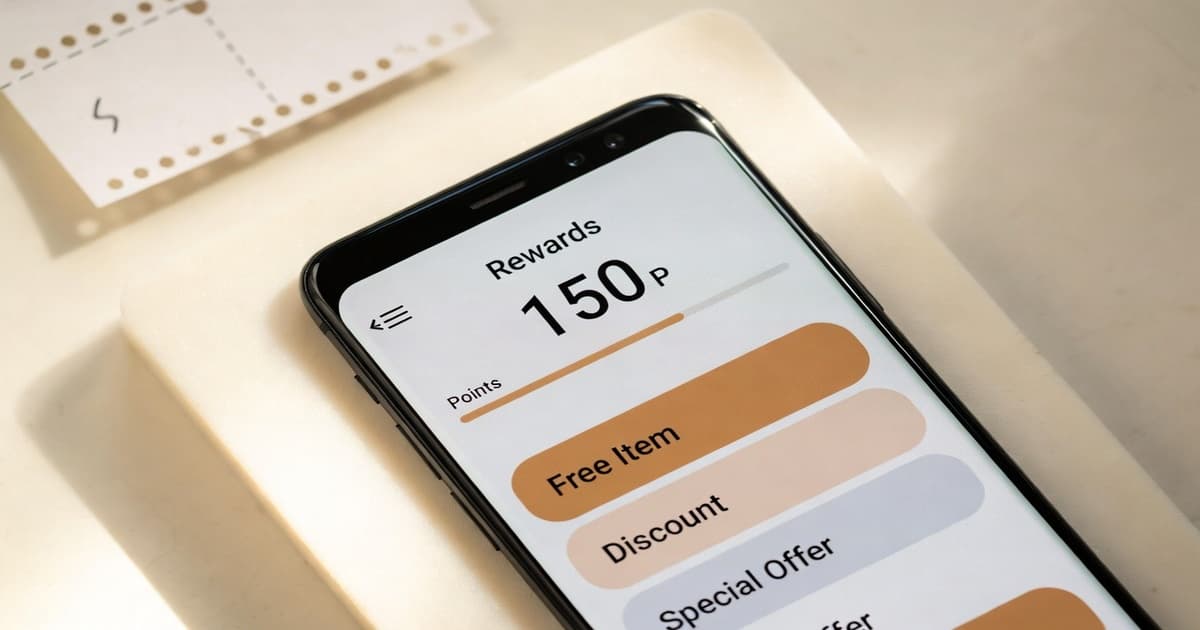
Both punch cards and points programs look like loyalty programs from a distance. They reward repeat visits. They feel like a small thank-you to regular clients. They are easy to launch.
Look closer and they are very different tools. The format you pick shapes which clients you retain, what your loyalty program is actually worth to the business, and how much work it takes to run.
For most small beauty businesses, points programs win. Here is the case, with the cases where punch cards still make sense.
What each format actually rewards
A punch card rewards visits. A client who books a $35 polish change gets the same punch as a client who books a $120 full set. Ten punches, free service. The format treats every visit as equivalent.
A points program (one point per dollar is the simplest version) rewards spend. The $35 client earns 35 points. The $120 client earns 120 points. The same redemption threshold takes the smaller client about three times as long to reach.
This difference is the entire argument. A loyalty program should reward the behavior you want more of. Punch cards reward frequency at any price point, which can mean rewarding your least valuable clients fastest. Points programs reward total contribution, which aligns the program with the math of running the business.
The math gap
Run a quick comparison.
A salon with two regular clients: Anna spends $35 every six weeks on polish changes. Beth spends $150 every six weeks on full color.
Over a year, Anna spends about $300. Beth spends about $1,300.
On a punch card program (10 visits = $40 reward), both earn the reward at roughly the same time, because both visit roughly the same number of times. The salon is giving Anna a reward worth about thirteen percent of her annual spend, and giving Beth a reward worth about three percent.
On a points program (1 point per dollar, 200 points = $10 off), Beth hits redemption nearly four times faster than Anna. The salon is giving rewards proportional to the value each client brings.
Which client do you want to retain more aggressively?
For most beauty businesses, Beth is the answer. Punch cards quietly subsidize Anna at Beth's expense.
Friction and visibility
Paper punch cards have an obvious problem: clients lose them. The card lives in a wallet, in a purse, sometimes in a glove compartment. Some clients lose the same card three times. Lost cards mean lost loyalty.
A digital points program lives on the client's phone, accessible any time. They check their balance themselves. They see how close they are to the next reward. The visibility is a feature: the client is reminded of their accumulated value every time they look, which is the psychological hook that drives return visits.
Punch cards also have no second touch. The client receives the punch at checkout and never sees the program again until the next visit. Points programs can ping the client at meaningful moments: "You're 20 points away from a free service" lands at exactly the right time to encourage a booking.
Birthday integration
Birthday rewards are the highest-impact single feature of a loyalty program. We covered this in loyalty programs for nail salons: the emotional weight of being remembered is disproportionate to the cost of the perk.
Punch cards cannot easily incorporate birthday perks. There's no record of the client's birthday on the card itself. The owner would need a parallel system. Points programs almost always have a client profile that can carry a birthday field, which means birthday automation is built in.
If you only added one loyalty feature, automated birthday recognition would beat the basic points-or-punches choice. Points programs typically include it. Punch cards typically don't.
Where punch cards still work
In two specific contexts.
A single, narrow service offering. A blow-dry bar where every appointment is the same price and the same length can run a punch card cleanly. The visit-equals-visit equivalence is true in that business. The math gap doesn't apply.
A walk-in heavy business with no booking system. Punch cards can be physically issued without any software. For an owner-operator doing fifteen walk-ins a day in cash, paper punch cards take three minutes to set up.
If your business is neither of those, points programs almost always win on every dimension that matters.
What "good" looks like in practice
A working points program for a small beauty business has five characteristics.
Simple math. One point per dollar spent. No multipliers, no tiers, no expirations. If the math takes longer than ten seconds to explain at checkout, it is too complicated.
A threshold clients can reach. 200 points for a $10 reward is reasonable. 1,000 points for a $50 reward is technically the same ratio but feels distant enough that clients lose motivation. Lower thresholds with smaller rewards work better than higher thresholds with bigger rewards.
Visible balance. The client should be able to check their points at any time without asking. A client portal with a points display does this without intervention.
Automated tracking. Manually entering points after every appointment is how programs die. The points should accumulate automatically when an appointment is completed, with no owner action required.
Built-in birthday recognition. Independent of the points balance, automated birthday wishes (with or without a perk) compound the goodwill of the program without adding to your workload.
If you have all five, your loyalty program will work harder than your competitors' programs without you having to think about it.
When to launch
Not in month one. As we covered in the first 100 clients, loyalty programs are more effective once you have a small base of repeat clients to anchor them. Launching to zero clients is just configuration with no audience.
Once you have a few dozen repeat clients, a points program quietly tightens retention without much active management. It compounds over the years. Two years in, a meaningful portion of your appointments will be coming from clients chasing their next redemption, which is exactly what a loyalty program is for.
The clients who would have drifted are now anchored. Not by the perk itself, but by the small psychological pull of progress toward something. That pull, multiplied across your client base, is a quietly significant part of how some salons grow into businesses that run themselves.
Built for businesses like yours
Lumidara is the affordable scheduling and client platform for independent salons, nail studios, lash bars, and spas. Free to start. No credit card required.
See how Lumidara works