How to Use Referrals to Grow Your Salon Client List
Referrals are the highest-trust client acquisition channel for any beauty business. Here's how to set up a program that actually generates them.

The single highest-quality client acquisition channel for almost any beauty business is referrals. A new client who walks in because their friend told them about you arrives with trust already built. They book the bigger service. They tip well. They themselves refer.
Most owners know this in the abstract and do almost nothing to actively generate referrals. They wait. The referrals that come are accidental.
A small amount of structure changes this dramatically. Here is how to build a referral program that actually produces clients, without making the process feel transactional.
Why referrals work better than anything else
Three reasons.
Trust transfer. A new client who heard about you from a stranger has to evaluate you from scratch. A new client who heard from a friend already trusts the recommendation. They walk in primed to like you.
Better fit. Friends tend to have overlapping aesthetics, budgets, and standards. The clients your existing happy clients refer are usually a great match for your business. Bad-fit clients are filtered out by the recommendation itself.
Higher loyalty. Referred clients have a built-in reason to stay: they're connected to your existing client community. Leaving you would be a tiny bit awkward.
The math on this is striking. Across most service businesses, referred clients have a 20 to 40 percent higher lifetime value than clients acquired through marketing. They book more, stay longer, and refer more themselves.
Why most owners don't get them
Most owners don't actively ask for referrals. That is the entire reason.
The implicit logic is: if my work is good, clients will tell their friends. This is partially true. Some clients will refer without prompting. But the majority will not, even if they love you, because telling friends is a task that competes with everything else in their attention. It falls off the list.
A simple "I'd love it if you sent your friends my way" at the end of a great appointment converts referrals from accidental to systematic.
The simplest referral structure that works
You don't need software for this initially. The basic version is:
For the referrer: $20 off (or 200 points, if you have a points program) when a friend they refer books and completes their first appointment.
For the referred friend: $20 off (or equivalent value) their first appointment.
That's it. Two-sided reward. Modest enough that you can afford it. Generous enough that it actually motivates.
The mechanism: the referrer gives the friend their name or a code at the time of booking. The friend mentions it when they book. Both rewards apply after the appointment completes.
You can track this in a spreadsheet for your first dozen referrals. Beyond that, a client management tool with built-in referral tracking saves you a lot of effort and prevents missed rewards.
How to ask without being awkward
The end of a great appointment is the right moment, and the entire script is one sentence.
"If you know anyone looking for [your service], I'd love it if you sent them my way. They get $20 off their first visit, and so do you."
That's it. Said warmly, in the natural rhythm of wrapping up the appointment. Most clients respond positively. Some say "I have a friend who would love this place." Others nod and don't follow through. That's fine. You've planted the seed.
What you don't want to do:
- Lead with the program at the start of the appointment ("just so you know, we have a referral program")
- Send a separate email asking for referrals (feels like marketing)
- Repeat the ask aggressively (feels like a sales pitch)
- Offer rewards that are huge (signals desperation)
A single warm mention at the end of each appointment, used consistently, converts a meaningful percentage of clients into referrers over time.
What to reward
Two principles.
The reward should feel meaningful but not weird. $20 off, a free upgrade, a free add-on service. Not "$200 cash" (looks like you're paying for marketing) and not "10% off your fourth visit" (too small and complicated).
The reward should encourage the right behavior. Reward the referrer when the referred client actually completes their first appointment, not just at booking. This filters out fake referrals and rewards real conversions.
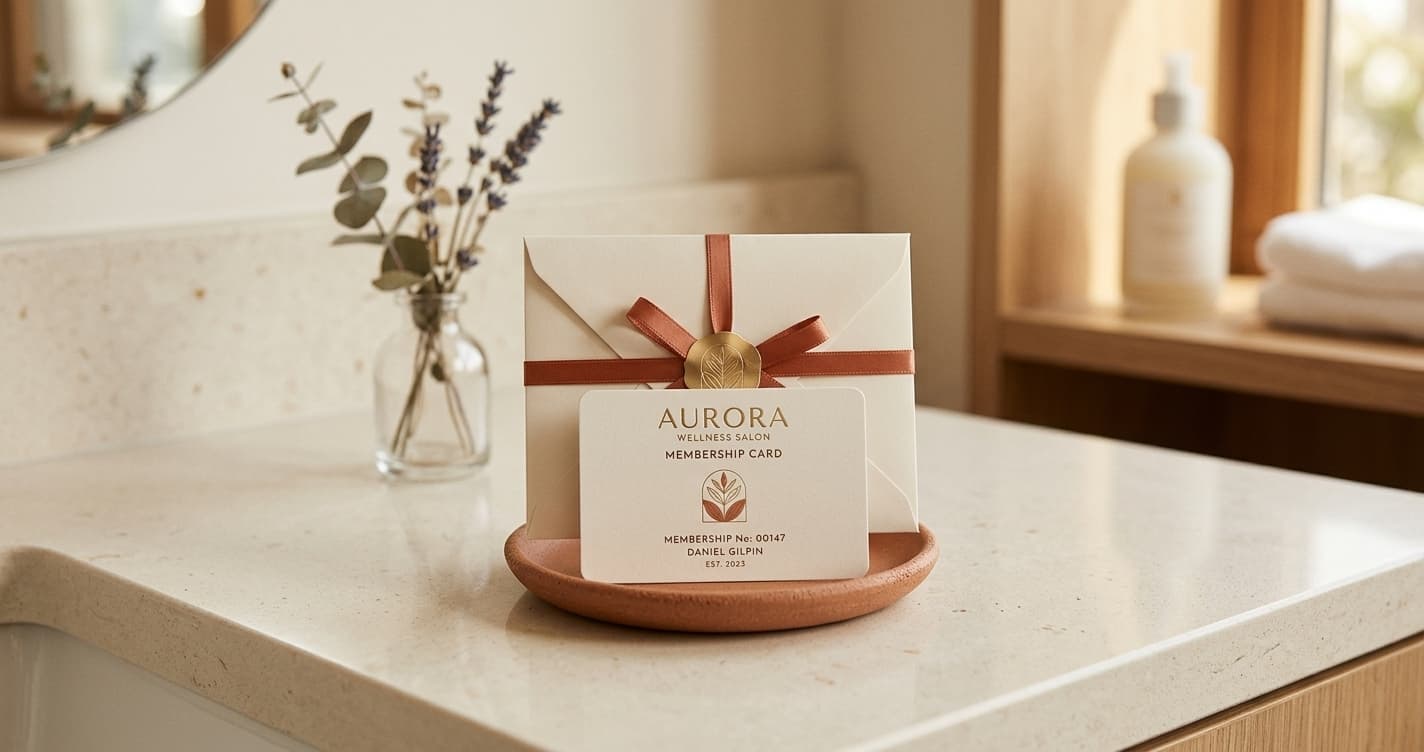
If you have a points program, use it. Referrals fold naturally into the existing redemption mechanic. The referrer gets, say, 200 points (enough to redeem for $10 off) when their referred friend completes their first visit. Clean, simple, no separate tracking.
Tracking attribution
You need a way to know which new client came from which existing client. Three options.
The "who sent you" question. During booking or at the first appointment, ask the new client how they heard about you. If they name a name, you have your attribution. This is the simplest method and works fine at low volume.
A code per client. Each referrer gets a unique code (their name plus a number is fine). The friend uses it when booking. This is more reliable but adds a small step.
Software tracking. Some client management tools have referral tracking built in: each client has a referral link, and bookings made through that link are automatically attributed. This is the most reliable and scales without effort.
Pick whichever fits your volume and tooling. Don't over-engineer this on day one.
The compounding effect
Here's what makes referral programs special. Every successful referral produces two effects:
The new client comes in.
And the existing client feels rewarded for their loyalty.
Both effects compound over time. The new client becomes a regular. They themselves start referring. Six months in, you have a second-generation referrer. Twelve months in, you have a network of clients who all came from each other.
This is why referrals are the strongest acquisition channel for small beauty businesses. It is also why the salons that grow steadily for years are usually the ones who quietly cultivated a referral habit early.
You will not see the effect in month one. You will see it in year two.
A note on incentivizing aggressively
Some owners run "bring a friend free" promotions or "$50 referral bonus" pushes during slow weeks. These can produce a short-term spike, but they tend to attract price-shopping referrers and one-time bookings.
The sustainable model is modest, consistent rewards offered to every client, in a relaxed tone. The clients who refer real friends do it because they genuinely love your service. The reward is a thank-you, not an incentive.
If you find yourself escalating the reward to drive volume, the issue is probably not the reward size. It is that your existing clients are not engaged enough with your business to think about referring. That is a retention problem, not a referral program problem. (See why salon clients ghost you.)
Fix the underlying engagement and the referrals follow.
Built for businesses like yours
Lumidara is the affordable scheduling and client platform for independent salons, nail studios, lash bars, and spas. Free to start. No credit card required.
See how Lumidara works