Managing a Salon Suite Solo: The Systems That Actually Help
Running a suite alone means being the artist, the receptionist, and the bookkeeper. Here are the systems that remove the most work for the least effort.
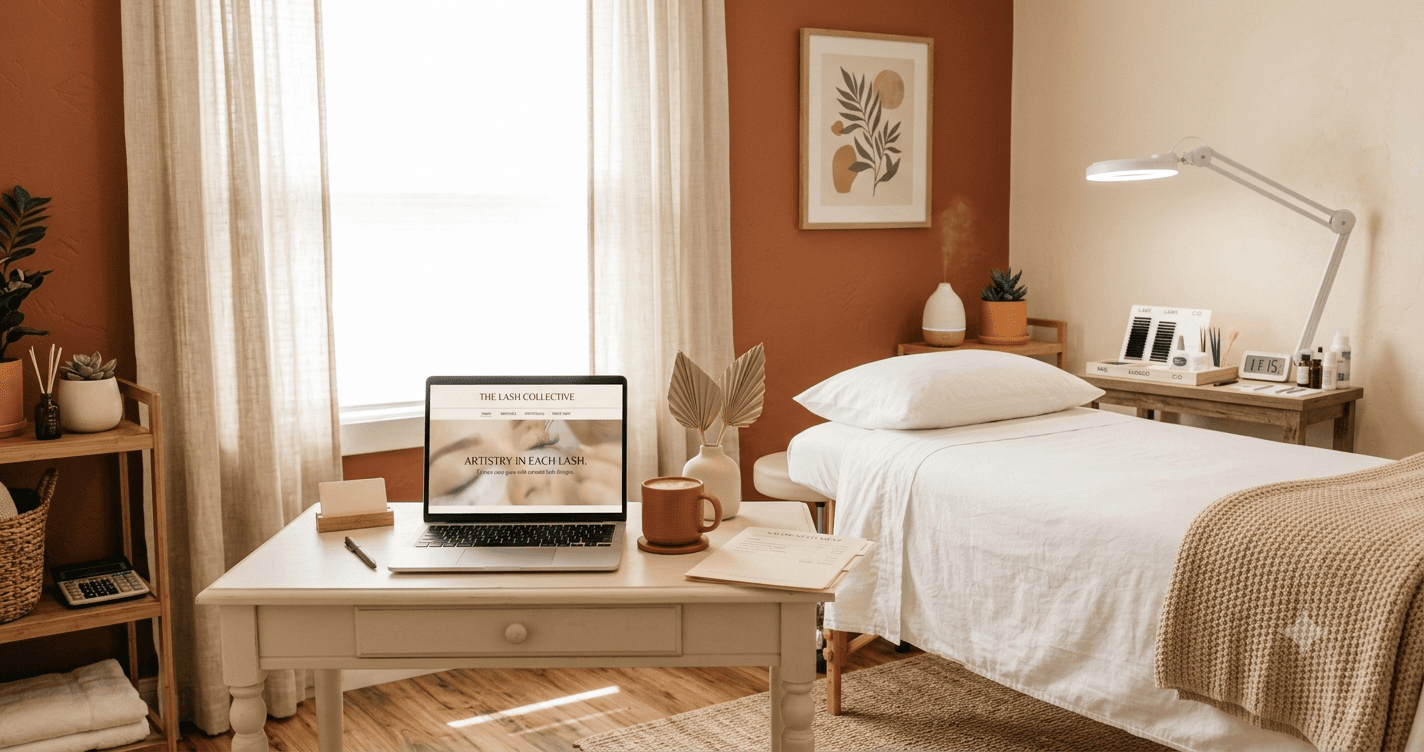
Nobody warns you that the hardest part of moving into a salon suite is not the rent or the build out. It is that every task which used to belong to someone else is now yours.
The front desk that answered the phone is gone. The person who ordered product is gone. The manager who chased the client who did not show up is gone. All of it lands on you, in the gaps between appointments, usually while you are also trying to eat something.
Here are the systems that remove the most of that load for the least effort, roughly in order of return.
1. Get booking off your phone and out of your DMs
The single biggest time drain for suite operators is manual booking. A client messages on Instagram, you check your calendar, you propose two times, she replies four hours later, one is gone, you propose two more.
That exchange takes fifteen minutes of attention spread across a day, per client. Twenty clients a week and you have lost most of a working day to scheduling logistics.
Real-time online booking removes it almost entirely. The client sees actual availability and books. You get a notification. Nothing else is required from you. We covered what to look for in online booking for salons.
Do this first. Everything else on this list saves less time.
2. Automate the three messages you keep forgetting
There are exactly three recurring messages that matter, and manually sending them is unsustainable for one person.
The confirmation, immediately after booking. The reminder, 24 hours before, with a way to reschedule in one tap. The rebooking nudge, three to four weeks after the appointment.
Configured once, these run forever and quietly protect a meaningful share of your revenue. The reminder alone typically cuts no-show rates substantially, as covered in how to use appointment reminders.
If you are sending these by hand, you are doing a receptionist's job at an artist's opportunity cost, and you will stop doing it during your busiest weeks, which are exactly the weeks it matters most.
3. Batch the admin instead of interleaving it
Suite operators tend to do admin in the fifteen minute gaps between clients. Restocking, replying, invoicing, ordering, all wedged into the seams of the day.
This feels efficient and is not. Each switch costs you focus, and the work expands to fill the available fragments. It also means you never actually rest between appointments, which is a direct contributor to burnout.
The alternative is one admin block a week. Two hours, same day and time, everything batched: ordering, bookkeeping, content, follow ups, anything that is not client work. Protect it in your calendar like an appointment.
Almost nothing in a solo beauty business is genuinely urgent within two hours. Treating it as though it is has a real cost.
4. Keep client notes that are actually useful
The difference between a suite that feels personal and one that feels transactional is almost entirely notes.
Not just formula, timing, and service history, though those matter. The personal details too. Her daughter's name, the trip she mentioned, the fact that she prefers silence before 10am, the reason she is growing her hair out.
Write them immediately after the appointment, not later. Later never arrives. Thirty seconds per client, and the compounding effect over two years is a book of clients who feel genuinely known. That is the mechanism behind turning repeat clients into loyal ones.
5. Set your hours deliberately and defend them
Suite operators consistently work more hours than they intend to, because there is no external structure preventing it. A client asks for a Sunday and you say yes. Someone needs an 8pm and you take it. Within six months your week has no shape.
Decide your hours once, publish them, and configure your booking availability to enforce them. If the system will not offer a Sunday, you do not have to be the one saying no. That is a surprisingly large emotional relief.
Build in buffer. Back to back appointments with no gap look efficient on a calendar and are miserable to live through. Fifteen minutes between clients is the difference between a demanding day and an unsustainable one.
6. Separate your money on day one
Open a business checking account and run everything through it. Every payment in, every supply purchase out.
Set aside a fixed percentage of every payment for taxes, ideally automatically, into a separate account you do not touch. Most solo operators should be reserving somewhere in the range of 25 to 30 percent, though your actual rate depends on your jurisdiction and situation. Talk to an accountant once, early, rather than guessing for three years.
The suite operators who end up in trouble are rarely the ones who did not earn enough. They are the ones who never separated business money from personal money and discovered the problem in April.
7. Order supplies on a schedule, not on panic
Running out of a core product mid week is a genuinely expensive mistake, because it either costs you appointments or costs you a rush order at retail prices.
Fix it with a standing monthly order and a simple par level list: for each core product, the quantity that triggers a reorder. Check it during your weekly admin block. Ten minutes a month prevents almost every supply emergency.
8. Build in the thing that stops you burning out
This is a system, not a mood.
Solo work in a small room is isolating in a way most people underestimate. There are no colleagues, no shared lunch, no one to debrief with after a hard client. Many suite operators do not notice the effect for a year and then find themselves inexplicably dreading a job they used to love.
Deliberate countermeasures help more than willpower. A standing coffee with another suite operator in your building. A monthly education day that gets you around other artists. One weekday afternoon blocked off permanently, not as a reward for a good month but as a fixed feature of the week.
Also protect your body. Static posture and repetitive fine motor work accumulate, particularly in lash and nail work. Proper stool, correct bed or table height, good lighting, and genuine breaks are not indulgences. They are the difference between a ten year career and a four year one.
What this looks like when it is working
A well-run suite is quiet. Bookings arrive without conversation. Reminders go out without you. Clients rebook at the chair. Admin happens in one block. Supplies show up before you need them. The books are separated and the tax money is already set aside.
None of that requires expensive software or unusual discipline. It requires deciding once, configuring once, and then leaving it alone.
The operators who struggle are almost never the ones with less talent. They are the ones still doing every one of these tasks manually, in the gaps, at the end of a long day, in a business that is quietly demanding a full second job on top of the one they trained for.


Built for businesses like yours
Lumidara is the affordable scheduling and client platform for independent salons, nail studios, lash bars, and spas. Free to start. No credit card required.
See how Lumidara works