How to Get More Google Reviews for Your Salon
Google reviews are the highest-leverage local marketing a salon has, and most owners barely ask. Here's how to get more of them without being awkward.
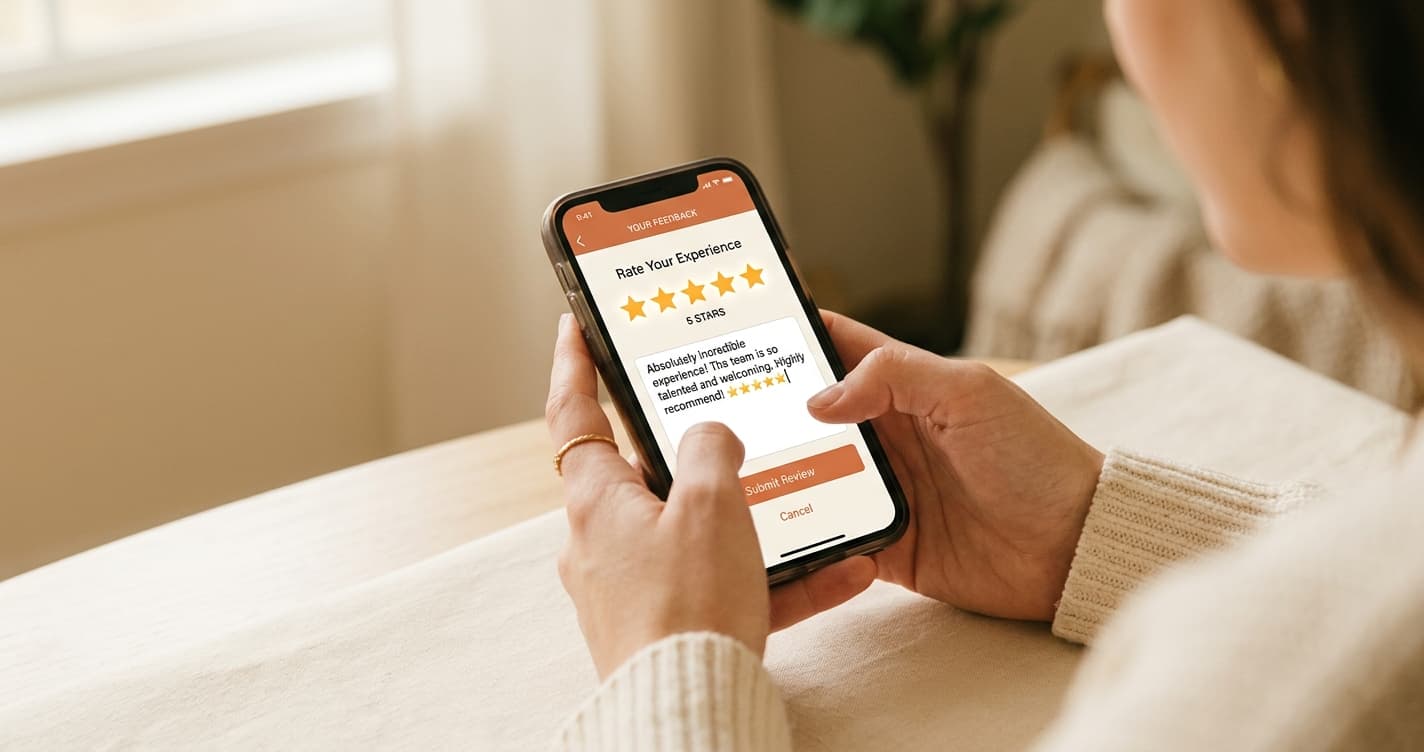
Google reviews are the highest-leverage marketing a local beauty business has, and it is not close. They drive your ranking in local search, they are the first thing a prospective client reads, and they cost nothing to accumulate except the small discomfort of asking.
That discomfort is exactly why most salons have far fewer reviews than they should. The work is excellent, the clients are happy, and nobody ever asks them to say so publicly. Here is how to fix that without feeling like a pest.
Why volume matters more than you think
Two salons do identical work. One has 8 reviews, the other has 80. The one with 80 wins, and it wins in several ways at once.
It ranks higher in the local map results, because review count and recency are ranking signals. It converts better, because a prospective client trusts 80 voices more than 8. And it absorbs the occasional bad review without flinching, because one unhappy client among 80 barely moves a 4.8 average, while one among 8 is a visible dent. We covered that resilience effect in how to handle a negative review.
The lesson is that your single best defense against a bad review, and your single best local marketing asset, is the same thing: volume. And volume comes almost entirely from asking.
The reason you do not have enough
It is not that your clients are unwilling. Most happy clients are glad to leave a review when asked directly. It is that they never think to do it unprompted, and you never prompt them.
A client leaves delighted, means to say something nice online, gets in the car, and life resumes. The intention evaporates within minutes. It was real, and it went nowhere, because nothing converted it into action in the moment.
Your job is to be that prompt, at the moment the client is happiest, with the smallest possible number of steps between the intention and the posted review.
Ask in person, at the peak
The single most effective method is a direct, warm, in-person ask at the end of a great appointment.
The client is looking in the mirror, pleased. That is the peak. That is when you say something like: "If you have a minute later, a Google review would genuinely help me. It is how new clients find me, and it means a lot." Said naturally, while you are finishing up.
Most clients say yes. Some do it in the parking lot. The in-person ask works because it carries a small social warmth that a text or email cannot replicate. You helped them, they like you, and you have made a simple, honest request.
Do not ask every client robotically. Ask the ones who are visibly happy, which is most of them, most of the time. And ask sincerely, not as a rehearsed line they can hear is rehearsed.
Remove every step between intention and review
An ask is only as good as how easy it is to act on. If the client has to search for your business, scroll to find the review button, and figure out the flow, most of them lose momentum.
Close the gap. Google provides a direct review link for your business that opens straight to the review form. Get that link, shorten it, and put it everywhere the client might act: as a QR code at your station, in a thank-you text after the appointment, in your email signature, on a small card you hand them.
The ideal path is one tap from "I want to leave a review" to a blank review form with the stars ready. Every step you remove raises the share of good intentions that become posted reviews.
The follow-up text that works
The in-person ask plus a same-day follow-up text is the highest-converting combination.
A few hours after the appointment, when the client is still enjoying the result: "Thank you again for coming in today. If you have a moment, here is a direct link to leave a review. It genuinely helps a small business like mine." Then the link.
The message is short, warm, and it carries the one-tap link. It catches the clients who meant to and forgot, which is most of the ones who did not do it on the spot.
Send this once. Do not chase it with reminders. A single well-timed follow-up is helpful. A second one is nagging, and nagging a happy client is a good way to make them less happy.
What you cannot do
A few hard lines, because crossing them can get your reviews removed or your profile penalized.
Do not offer payment or discounts for reviews. Review gating and incentivized reviews violate Google's policies and can get your reviews taken down or your profile flagged. A review has to be freely given. You can ask. You cannot buy.
Do not filter for only happy clients. Selectively sending review requests only to clients you know are thrilled, while steering unhappy ones elsewhere, is called review gating and is against the rules. Ask broadly and honestly.
Do not write your own, or have staff or friends write fake ones. Beyond being against policy, it is transparent to readers and corrosive to trust. Fake-sounding reviews do more harm than a smaller number of real ones.
Do not buy reviews from a service. They are detectable, removable, and a fast way to damage a profile you spent years building.
The honest path is the only durable one: do good work, ask happy clients directly, make it easy.
Make it a habit, not a campaign
The salons with hundreds of reviews did not run a review blitz. They asked a few clients a week, every week, for years. Three good reviews a week is 150 a year. That compounds into a profile no competitor can easily match, built entirely from ordinary happy clients who were simply asked.
Fold the ask into your closing routine the way you fold in rebooking. It becomes automatic, it stops feeling awkward after the first dozen times, and it quietly builds the most valuable local marketing asset you have.
Responding matters too
Getting reviews is half of it. Responding to them is the other half, and it signals to every future reader that a real person is paying attention.
Reply to positive reviews briefly and warmly, using the client's name. Reply to negative ones calmly and without defensiveness, following the approach in how to handle a negative review. A profile full of thoughtful owner responses reads as a business that cares, which is exactly the impression that converts a browser into a booking.
Reviews are earned one happy client at a time, and asked for one small, sincere request at a time. The work you already do earns them. All that is missing, for most salons, is the asking. For the wider context on turning happy clients into a growing business, see the first 100 clients.
Built for businesses like yours
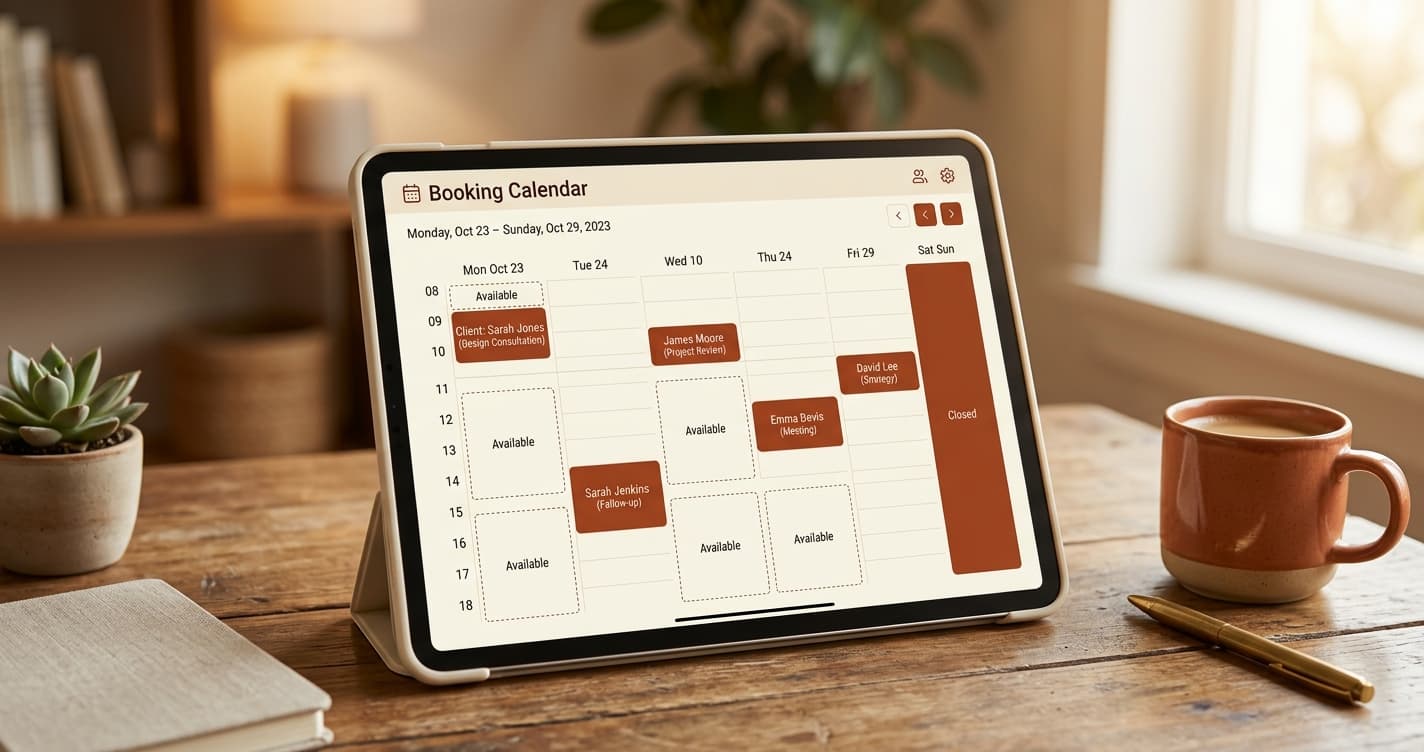
Lumidara is the affordable scheduling and client platform for independent salons, nail studios, lash bars, and spas. Free to start. No credit card required.
See how Lumidara works