Should Your Salon Take Booking Deposits? A Practical Guide
Deposits cut no-shows and protect long appointments, but set up badly they cost you bookings. When to require one, how much to charge, and what to tell clients.

Reminders reduce no-shows. A clear cancellation policy reduces them further. But nothing changes a client's behavior quite like money already paid. A client who has put down a deposit almost always shows up, and if she cannot, she almost always lets you know in time.
That makes deposits the most powerful no-show tool a beauty business has. It also makes them the one most likely to backfire if you introduce them carelessly, because a deposit is friction, and friction at the moment of booking costs you bookings.
Here is how to get the benefit without the cost.
What a deposit actually does
A deposit does three jobs at once.
It filters commitment. Someone who books casually, half intending to come, is less likely to book at all when a payment is required. That sounds like a loss, but those were often the bookings that turned into no-shows.
It compensates you when things go wrong. If a client does not show, you keep some or all of the deposit, which softens the loss of a slot you could have sold.
It changes how the appointment feels. Paid appointments feel real. Clients put them in their calendar, plan around them, and treat your time with the same respect they give a dentist.
We worked out the real cost of an empty chair in the real cost of a no-show. If your no-show rate is meaningful, deposits often pay for themselves within a month.
When deposits make the most sense
Deposits are not right for every service. They earn their place on:
- Long appointments. A three hour full set or a color correction is a huge hole in your day if the client vanishes.
- High value services. The bigger the price, the bigger the loss, and the more natural a deposit feels to the client.
- New clients. You have no history with them yet. A deposit is a fair way to start.
- Peak slots. Saturday mornings and evenings that you could easily fill twice over.
They make less sense on short, low priced services and for long standing regulars with spotless attendance. Many studios require deposits only on specific services, which keeps the friction where it pays for itself.
How much to charge
There is no universal number, but common approaches are:
- A fixed amount, such as $20 or $30. Simple to explain and easy to remember.
- A percentage of the price, often 20 to 50 percent. Scales naturally with the service.
- Full payment at booking. Increasingly common for high demand artists. The client pays everything up front and nothing is owed at the appointment.
The deposit should be large enough that losing it matters to the client, and small enough that it does not feel like a barrier to a first booking. For most services, something between a quarter and a half of the price hits that balance.
Whatever you choose, the deposit should come off the final bill. A deposit that is an extra fee on top of the price reads as a charge, not a commitment, and clients notice the difference.
Tell clients before they commit
The fastest way to lose a booking is to surprise someone with a payment screen they did not expect.
Make the deposit visible early:
- On your service list. "Deposit $30, applied to your service."
- On the booking confirmation step, before they pay.
- In your policy, with what happens to the deposit if they cancel late or do not show.
When clients see the deposit from the start, they treat it as part of how your studio works. When they discover it at the last step, it feels like a trick.
Decide your rules before the first exception
Deposits create situations you need answers for in advance:
- Cancellation with notice: most studios refund the deposit or roll it onto a new booking.
- Late cancellation or no-show: most studios keep it.
- Rescheduling: the deposit usually moves with the appointment, often limited to one reschedule.
- Emergencies: decide whether you will make exceptions, and handle them privately and consistently.
Write these rules into your cancellation policy so the deposit and the policy say the same thing.
What happens to a booking that never gets paid
One practical problem with online deposits: a client picks a time, reaches the payment step, and wanders off. If the slot stays held forever, nobody else can book it.
Good booking tools hold the slot while the client pays and release it automatically if payment does not arrive. In Lumidara, for example, a booking that requires a deposit holds the time while the client pays, and if payment never comes, the slot is released automatically within an hour or two and the appointment is marked as cancelled for being unpaid. You are only notified about the booking once the deposit has actually been paid, so abandoned checkouts do not clutter your inbox.
Whatever tool you use, check how it handles this case. An unpaid booking that blocks a Saturday slot for a week is worse than no deposit at all.
Where the money goes
Deposits taken online should land in your own payment account, the same one you use for card payments at the counter. That keeps your records in one place and means a refund, when you need one, goes back through the same account it came from.
In Lumidara, deposits run through the Stripe or Square account you connect, money goes straight to you, and Lumidara takes no cut. Deposits ride on online booking, so they are part of the Pro and Branded plans.
Introducing deposits to existing clients
If you have been running without deposits, introduce them deliberately:
- Start with new clients only. Existing regulars keep booking as before.
- Add deposits to your longest or most expensive services next.
- Announce the change a few weeks ahead with a short, calm message explaining that it helps you protect appointments for everyone.
Most regulars do not mind. Many appreciate it, because they have been on the waiting list for a slot that someone else did not bother to show up for.
The bottom line
Deposits are not about distrust. They are about matching the commitment your clients make to the commitment you make when you hold three hours of your day for them. Apply them where the stakes are real, make them visible before the client commits, and write down your rules in advance. Done that way, deposits mostly disappear into the background, and so do most of your no-shows.
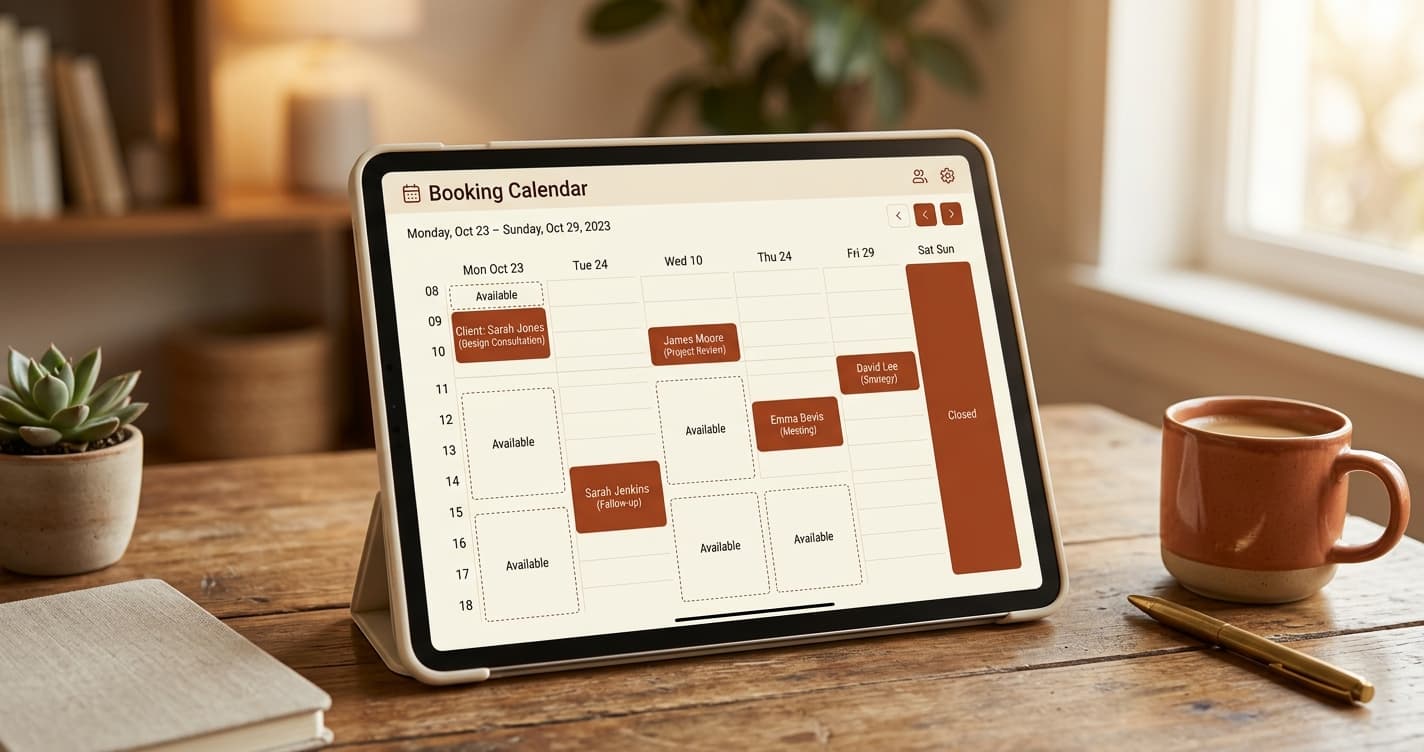

Built for businesses like yours
Lumidara is the affordable scheduling and client platform for independent salons, nail studios, lash bars, and spas. Free to start. No credit card required.
See how Lumidara works